The Quiet Privilege Of Working With Models
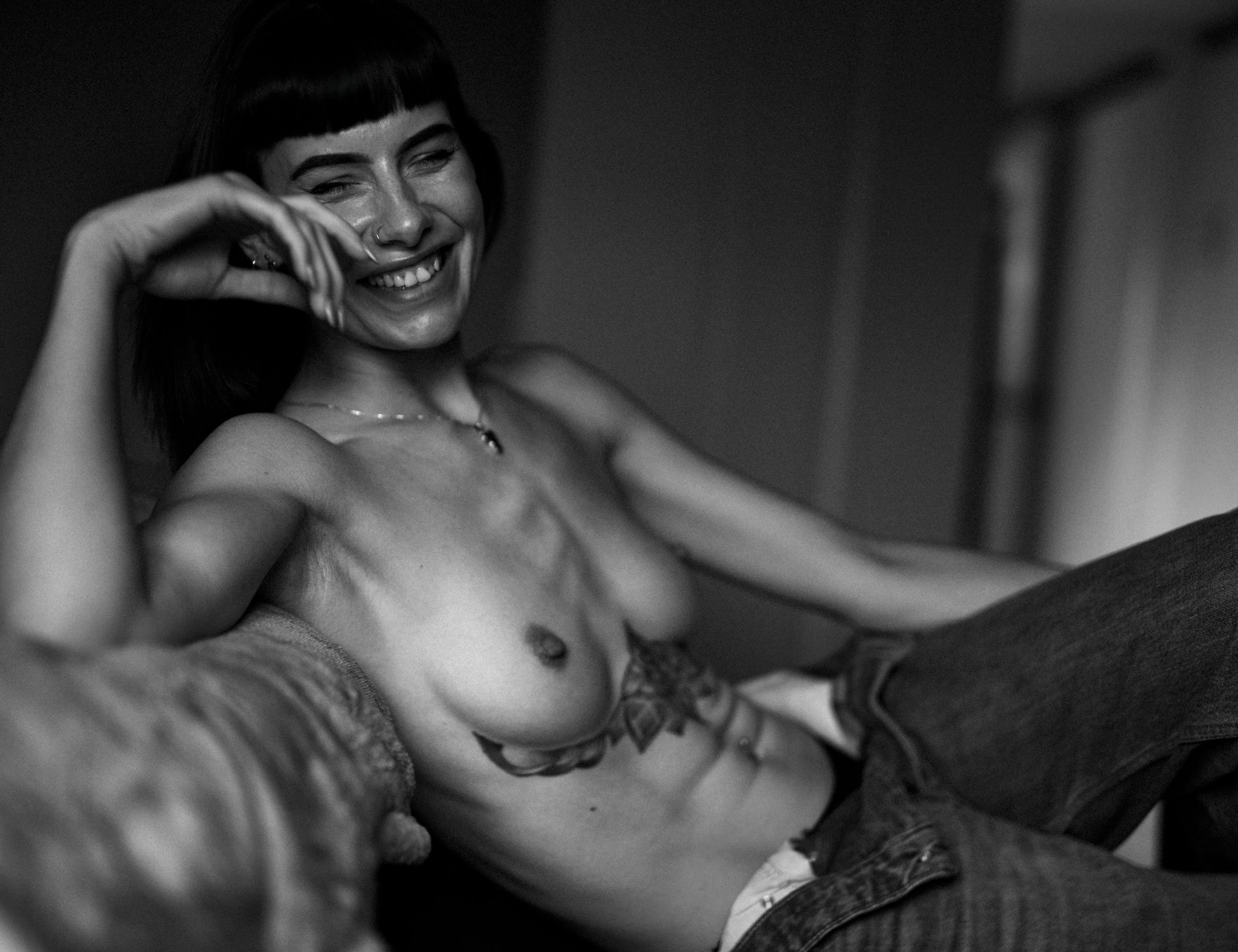
It dawned on me recently just how much of a privilege it is to work with models as a photographer. We often meet as strangers, spend only a few hours together, and then go our separate ways. Yet the images we create, and the memories attached to them, can last a lifetime. That imbalance of time versus impact is something I don’t think I’ll ever stop being humbled by.

Emily Roberts
It dawned on me recently just how much of a privilege it is to work with models as a photographer. We often meet as strangers, spend only a few hours together, and then go our separate ways. Yet the images we create, and the memories attached to them, can last a lifetime. That imbalance of time versus impact is something I don’t think I’ll ever stop being humbled by.
Nicole Rayner
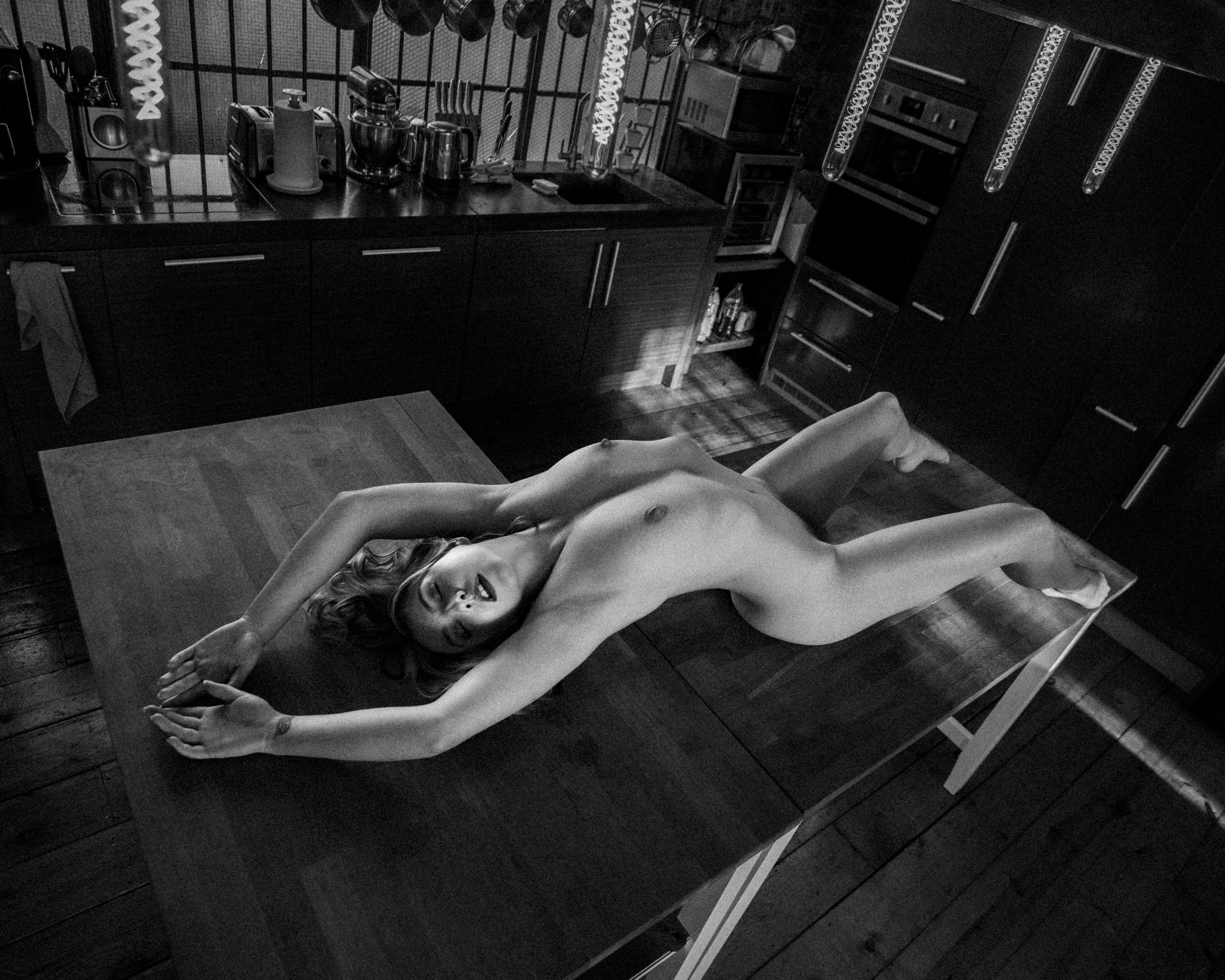
I’m one of those photographers who likes to revisit old work. Occasionally I’ll scroll back through images from a shoot years ago, not with any particular purpose other than curiosity. Almost without fail I’ll find a frame I somehow overlooked the first time, a fleeting expression, a subtle gesture, a quiet moment between poses. With fresh eyes that image suddenly reveals itself as a small gem.

Lulu Lockhart
What surprises me most when I do this isn’t just the photograph, but how vividly the shoot comes rushing back. I remember the session, the light in the room, the little conversations and shared laughs. A single frame can unlock an entire afternoon. It’s a reminder that photography doesn’t just capture how something looked, but how it felt to be there.

Tania Aresti
Sometimes those shoots involve nude or erotic photography. These are often the most misunderstood, yet they are among the most intimate and collaborative experiences I’ve had as a photographer. Two people who may never have met before come together, and within the span of a few hours can create something that feels deeply personal, alluring, and honest.

Nausicaa Yami
That kind of work demands trust, real trust, on both sides of the camera. For the model, it means vulnerability, confidence, and an ability to remain present in front of a lens. For the photographer, it means respect, clear communication, and an understanding that the images being created carry emotional weight as well as aesthetic value. When it works, it’s nothing short of incredible.

Jasmine High
Modelling itself is an art form that deserves far more respect and recognition than it often receives. It’s not just about posing or knowing your angles. It’s about interpretation. Many photographers, myself included, arrive with ideas that are half-formed or abstract. A mood, a feeling, a vague visual direction. A good model can take that uncertainty and help shape it into something tangible.

Anaïs Benmessaoud
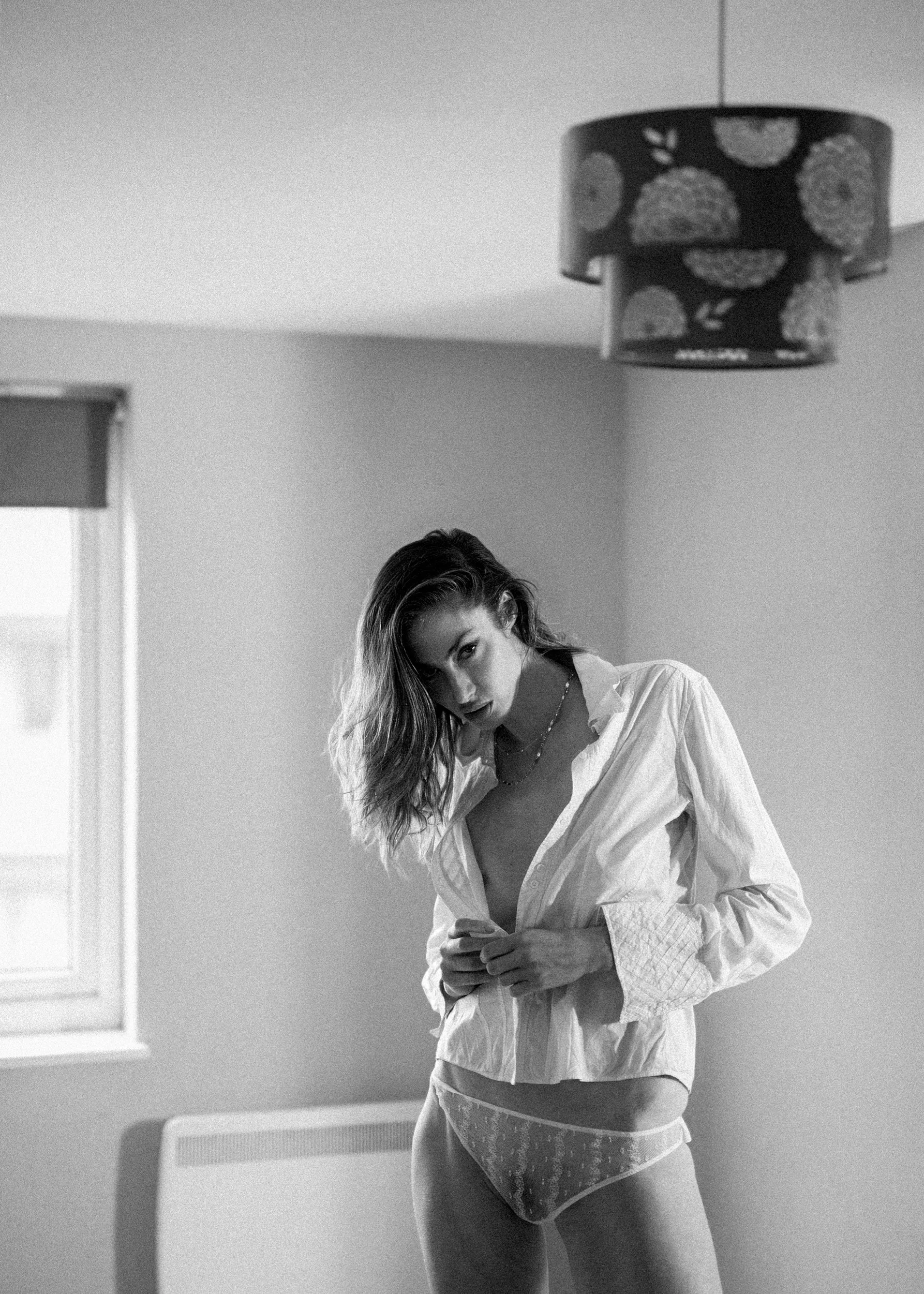
They read the room, adapt to the energy, and bring their own creativity into the process. They know when to push and idea, when to pull back, when stillness says more than movement. The best models don’t just appear in photographs; they actively co-create them.

Irida the Shapeshifter
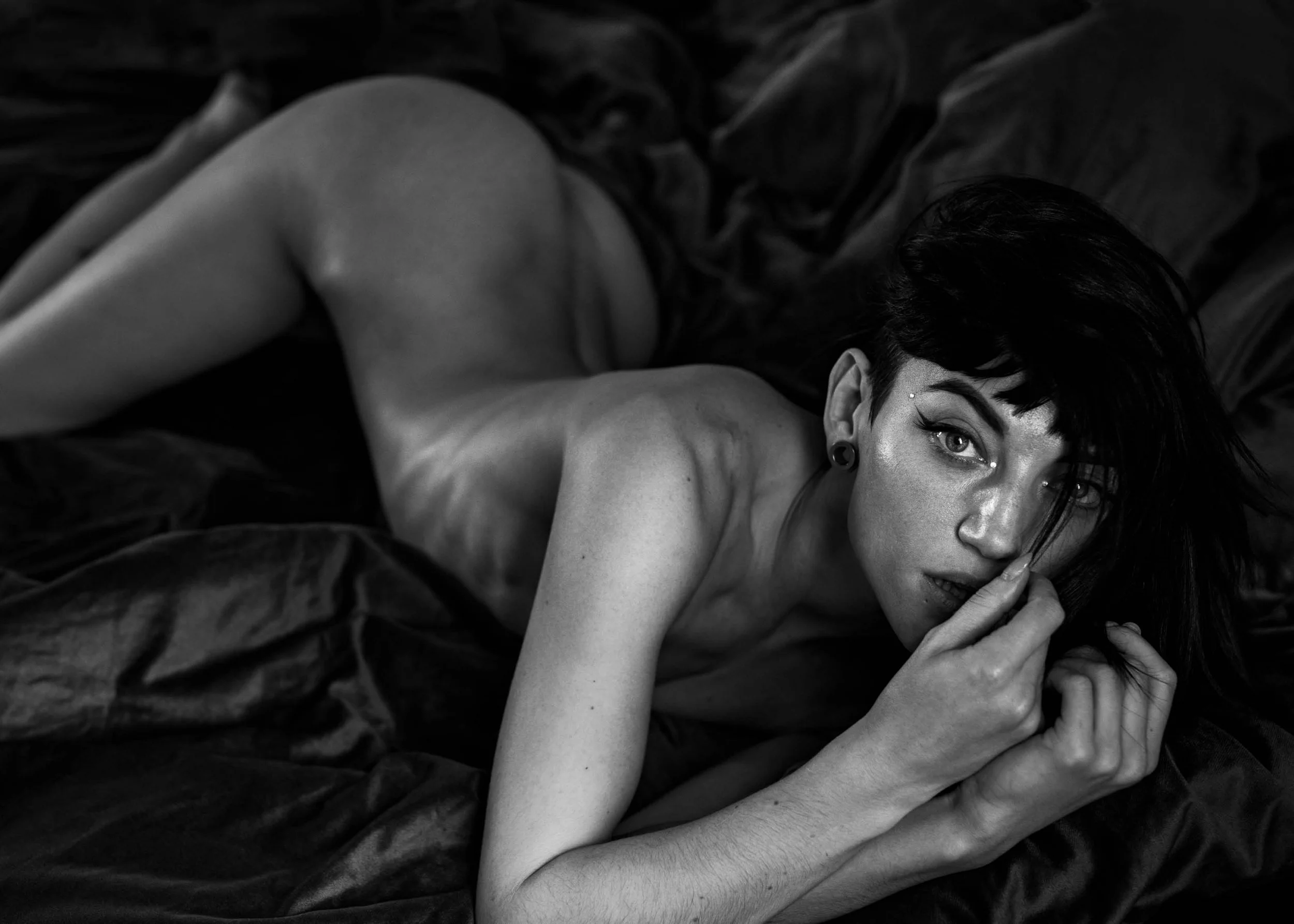
As a black and white photographer, I rely heavily on that collaboration. Without colour to distract, everything rests on expression, posture, light, and connection. The model becomes the narrative. Their ability to emote, to inhabit a moment, is what gives the image its power.
Jordan Ebbitt
Looking back over years of work, what stands out most isn’t a particular technique or setup, but the people. The shared moments. The fleeting partnerships that produced something lasting. It’s easy to forget, in the pursuit of better images or sharper skills, just how special those collaborations are.
Karina
I have enormous respect for those who step in front of the camera, for their courage, their creativity, and their trust. Long may it continue.

Ayla Rose
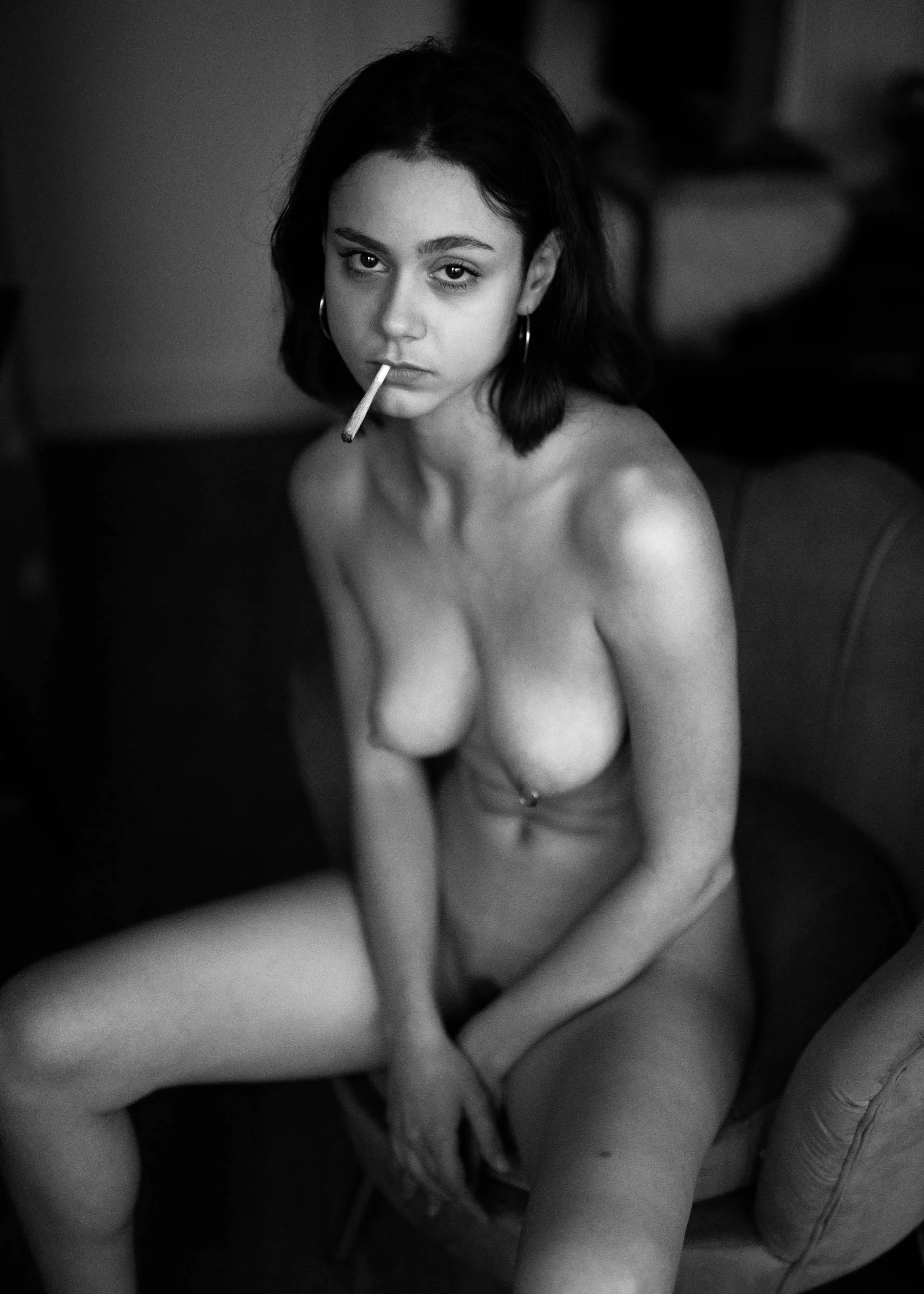
Why I Shoot Black and White Nude Photography — And It’s Not What You Might Think
When people first learn that I specialize in black and white nude photography, they often assume it’s a stylistic statement. A creative flair. Maybe an attempt to be dramatic or artsy. And sure, I love the timelessness and honesty of monochrome imagery, but the real reason runs quite a bit deeper.
I’m colourblind.

Irida the Shapeshifter
When people first learn that I specialize in black and white nude photography, they often assume it’s a stylistic statement. A creative flair. Maybe an attempt to be dramatic or artsy. And sure, I love the timelessness and honesty of monochrome imagery, but the real reason runs quite a bit deeper.
I’m colourblind.

Nausicaa Yami
It’s funny how often that surprises people, as if the art we make must always spring from some intentional “aesthetic choice.” But for me, working without colour isn’t about removing something, it’s about letting me actually see.

Chiara Elisabetta
Black and white is where the world becomes clear, defined, comfortable. It’s where I understand light, shadow, form, and depth without questioning whether I’m interpreting the scene “correctly.” It’s the closest thing to visual certainty I know.

Tania Aresti
Before a camera ever made its way into my hands, I drew. I painted. I spent hours hunched over paper with pencil or pen, shading slowly, getting lost in contour and contrast. Monochrome was my native language long before I knew it was one.

Hattie Grace
I didn’t choose it, it chose me, or perhaps I just grew into it. Looking back, it all makes sense. I never gravitated toward color because color was never clear. But shadow and shape? The quiet conversation between highlight and darkness? I could understand that.

Lulu Lockhart
Bodies tell stories without words. They’re raw, unfiltered, unapologetically human. When colour is removed, what remains is pure form, texture, curve, intention, vulnerability, power. It strips away distraction, performance, identity, and costume.

It’s not about sexuality.
Not about shock value.
Not about provocation.
It’s about truth.

Tink Kaos
In black and white, the body stops being something we look at and becomes something we look into. We see the person, not just their appearance, but their presence.

Catarina Correia
For me, black and white is not some romantic creative pose. It’s the world I’ve always seen most clearly. A place where my perception meets expression without distortion or doubt. The nude form, in that world, becomes a study not of color or glamour, but of being human.

Amber Rose
So no, it isn’t what most people first think.
I don’t shoot black and white to be dramatic. I shoot black and white because there, the image feels honest.
And I don’t shoot nudes to reveal skin, I shoot nudes to reveal truth.

Nicole Rayner
Black and white is where I live.
Nude photography is how I speak.
Together, they let me tell stories in the language I understand best.

Jordan Ebbitt
Why Black and White Still Captivates Me
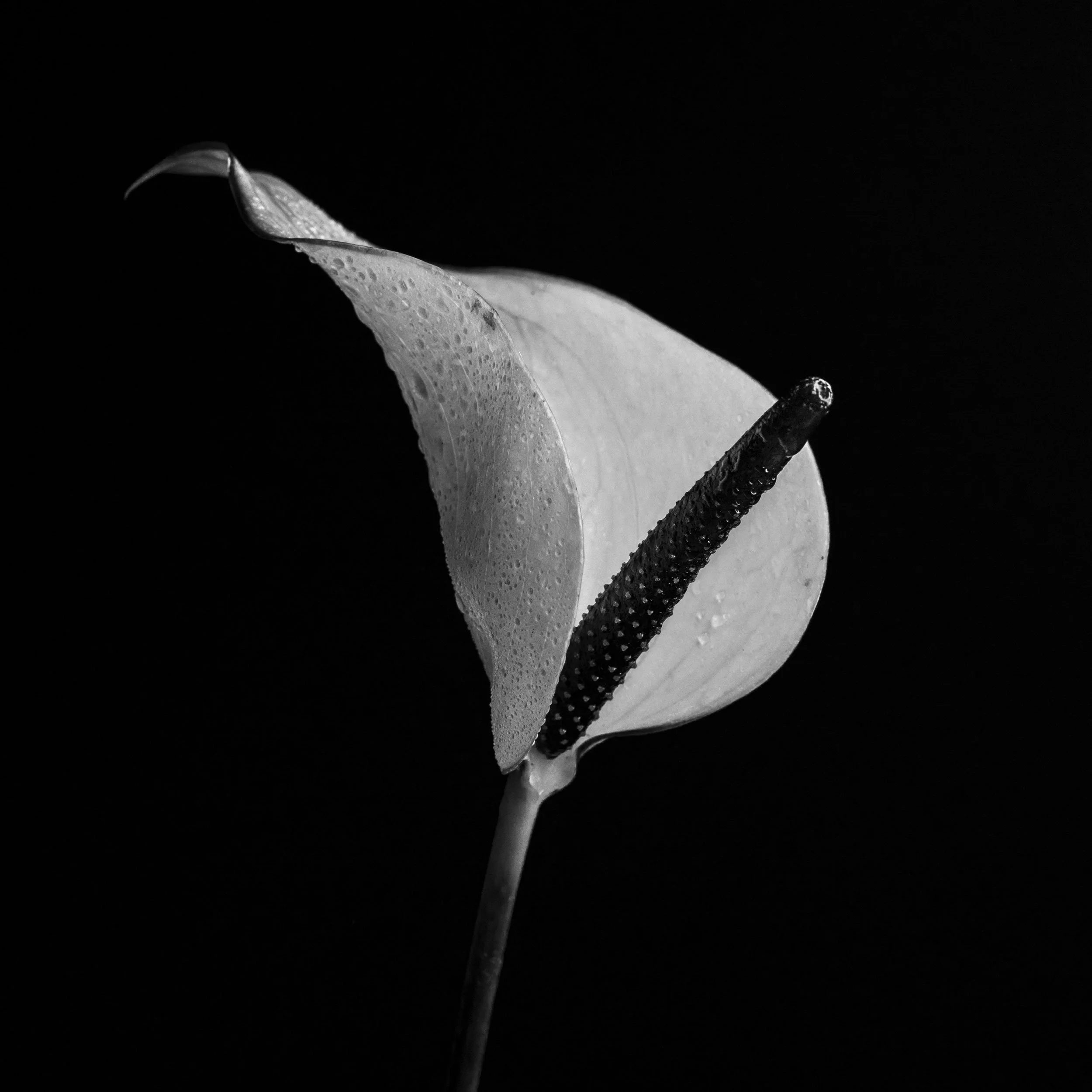
There’s something about black and white that continues to pull me in, no matter how much the world leans into colour. As someone who works across sensual nude, portraiture, sport, street photography and more, I’ve come to appreciate just how timeless and powerful these two tones really are. Black and white isn’t just a stylistic choice for me. It’s a mindset. A way of seeing.
There’s something about black and white that continues to pull me in, no matter how much the world leans into colour. As someone who works across sensual nude, portraiture, sport, street photography and more, I’ve come to appreciate just how timeless and powerful these two tones really are. Black and white isn’t just a stylistic choice for me. It’s a mindset. A way of seeing.

When I shoot in black and white, especially in my sensual portrait work, I’m reminded that the human body doesn’t need colour to be expressive. Texture, form, light, shadow, those are the real storytellers. Removing colour peels away the noise. What’s left is vulnerability, strength, softness and tension. All the contradictions that make us human. In many ways, it allows me to photograph not just what the subject looks like, but what they feel like.

Street photography in black and white hits differently. Without colour to seduce or distract, you see the grit of a city, the tension in a gesture, the geometry of a shadow falling across pavement. It feels more documentary, more direct. There’s no place to hide. I think that’s why I keep returning to it, because black and white feels like truth, even if it’s not always beautiful. Or maybe because it is.

Sport is fast. Chaotic. Full of adrenaline and movement. But in black and white, something changes. There’s a kind of poetry in the freeze-frame, a single drop of sweat, the twist of a body mid-air, the quiet before impact. The drama doesn’t need neon lighting or vibrant uniforms. It lives in contrast. In motion frozen just long enough to feel it.

I love colour. I use it often even though I am challenged by being colourblind. But there’s a certain kind of photograph that just demands to be in black and white. Sometimes I don’t even realize it until I see it that way. A shadow on a wall. A face in the half-light. A street corner at 5 a.m. Black and white has a way of turning the ordinary into something cinematic. Iconic, even. Like it’s always been waiting to be seen.

Some of the photographers I admire most, both classics and contemporaries, built their bodies of work in black and white. It’s a language with history. Referencing it in my own work feels like a quiet handshake with the past. It keeps me grounded, especially when I’m exploring genres as different as nudes and street. No matter the subject, black and white creates a thread between images. A throughline of tone and intention.

For me, black and white isn’t about nostalgia. It’s about impact. It’s about intimacy. It's about showing less but saying more. I use it not just because I’m colourblind, it’s because I want the viewer to feel something without being told what to feel.
In a world chasing more, more colour, more resolution, more everything, I find peace in less. And black and white reminds me that simplicity still speaks the loudest.

Isle of Sheppey
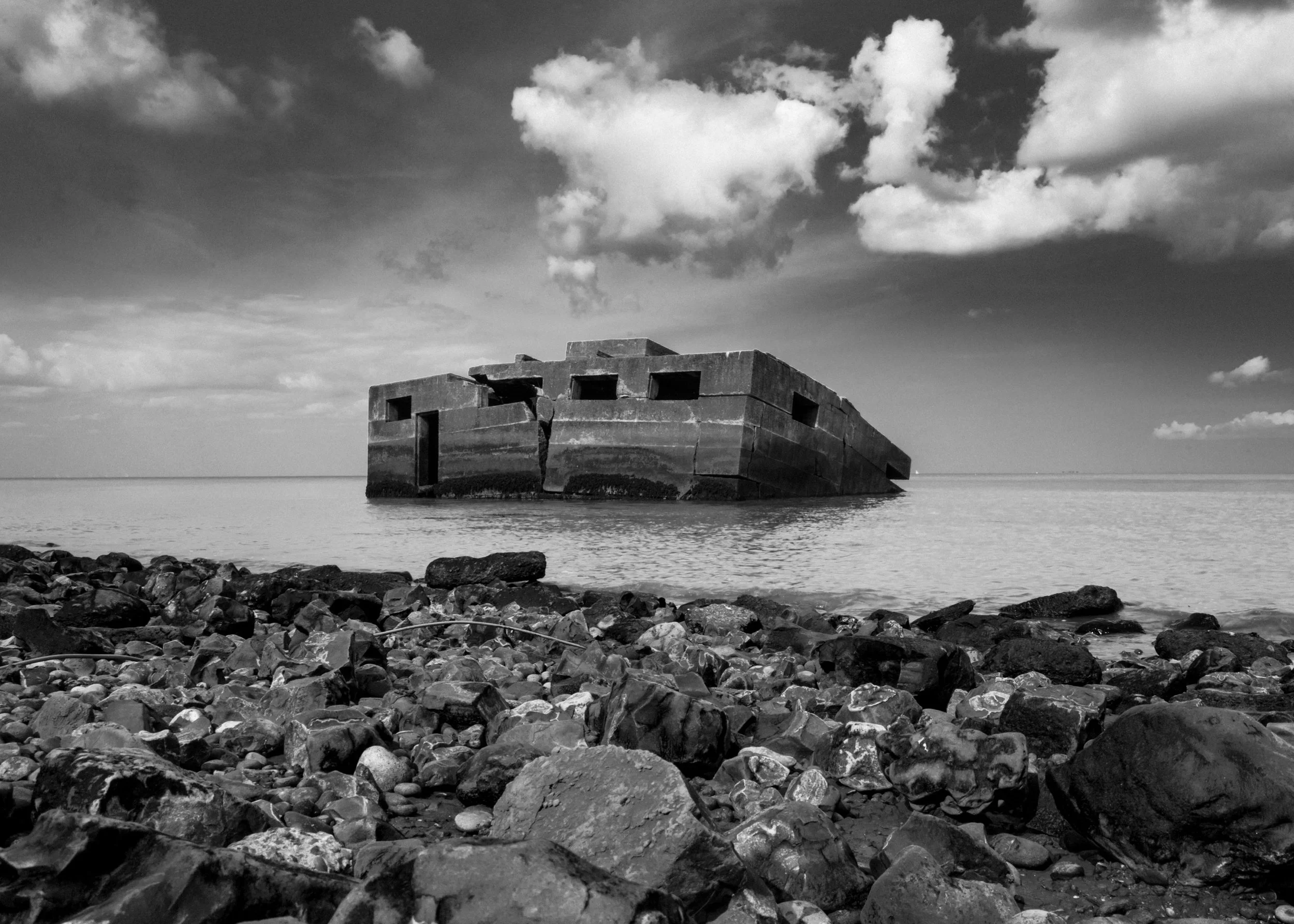
Warden Point on the Isle of Sheppey is a fascinating spot for a photography trip, especially if you're interested in capturing dramatic coastal landscapes, geological formations, and a bit of history.

Warden Point on the Isle of Sheppey is a fascinating spot for a photography trip, especially if you're interested in capturing dramatic coastal landscapes, geological formations, and a bit of history.

What to Expect:
Cliffs and Coastal Erosion: Warden Point is famous for its rapidly eroding cliffs, which offer a dramatic backdrop for landscape photography. The crumbling cliffs and exposed layers make for interesting geological shots.
Fossils: The cliffs are rich in fossils, especially from the Eocene epoch. You might be able to capture some unique macro shots of fossils embedded in the rocks.
Seascapes: The views over the Thames Estuary are stunning, especially during sunrise and sunset. The wide expanse of water, the changing tides, and the coastal weather can all provide dynamic photographic opportunities.
Old Coastal Defenses: There are remnants of World War II coastal defenses, including pillboxes and other structures that add an element of historical interest to your shots.
Abandoned Structures: The erosion has led to some buildings being dangerously close to the edge or already lost to the sea, adding an eerie and dramatic element to the scenery.

Use a Tripod: Especially if you’re shooting in low light or doing long exposures to capture the motion of the waves. On this trip I’d left mine at home so had to go hand had which is not ideal. But now I’ve been her once I know what to bring for my next visit.
Neutral Density Filters: Consider using ND filters for long exposure shots during the day to capture the movement of clouds and water.
Wide-Angle Lens: A wide-angle lens will allow you to capture the sweeping landscapes and the scale of the cliffs.
Macro Lens: Bring a macro lens if you're interested in photographing fossils or smaller details.
Drone Photography: If you have a drone, Warden Point’s cliffs and the surrounding landscape look incredible from the air. Just make sure to check local regulations before flying.

Safety Tips:
Be Aware of Tides: The tide comes in quickly and can cut you off from the path back. Always keep an eye on the tide times.
Stay Back from Cliff Edges: The cliffs are very unstable, and sections can collapse without warning. Keep a safe distance from the edge.
Footwear: Wear sturdy, waterproof footwear as the paths can be muddy, especially after rain.
Climbing the structures: I decided to give it a go and to be honest if you know what you’re doing it’s OK, but you need to be careful. The structures as in a very condition and can be slippery.

Nearby Attractions:
Minster Abbey: One of the oldest religious sites in England, Minster Abbey offers another historical element to your trip.
Sheerness Beach: Another spot for coastal photography, with a more traditional seaside feel.
Elmley National Nature Reserve: Not far from Warden Point, this reserve is great for wildlife photography, especially birds.
